Wild Meadow Studio
Bench Blog
Stories, skills, and inspiration from the jeweller’s bench—designing, making, and learning together.
A Necklace Made of Gratitude, Survival, and the Sea
A Necklace Made of Gratitude, Survival, and the Sea
Some pieces of jewellery are designed to be worn...
... Others are designed to be felt.
This necklace was made for my sister, Amy, as a thank you—for a holiday she chose to share with my partner, my daughter, and me—but also for everything that came before that trip. The parts that reshaped all of us.
A Year Without Hugs
The week before lockdown, Amy noticed an obvious change and followed her instinct to get herself checked. Within a month, she was diagnosed with breast cancer. Surgery followed quickly—a mastectomy—then treatment. Soon after, she learned it had spread and required a second operation.
Because of COVID, she went through her entire hospital treatment alone. No visitors. No holding hands. No sitting beside her in waiting rooms. From the moment her diagnosis was confirmed to the moment I finally saw her face-to-face again was a full year.
I could never have imagined learning that someone I love had cancer and not being able to be physically present. That first hug, when it finally came, was overwhelming—immense, grounding, and absolutely worth the wait.
Greece, Together
After her recovery, Amy booked a holiday to Greece so we could all go together—not just to celebrate survival, but to celebrate being together again. And, quietly, to mark her wedding anniversary (we won’t mention the number of years).

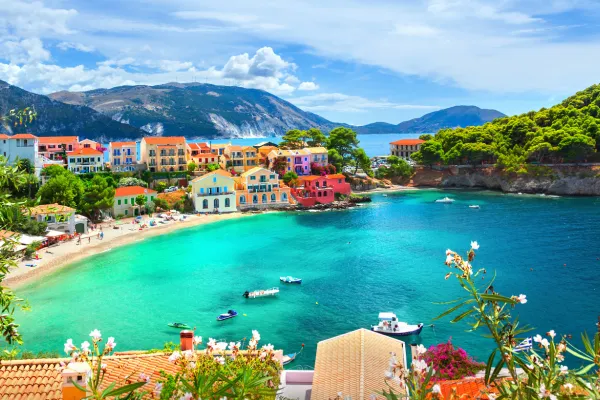
We travelled to her favourite island—one she has returned to many times since first visiting with her husband in their teens. Walking the places she had told me about for years felt incredibly special. It was a privilege to share those memories, not just hear about them.
That trip was a gift.
This necklace was my thank you.
Design Inspiration: Capturing a Place and a Life
When designing the necklace, I looked to ancient Greek jewellery and artifacts found across the islands—pieces shaped by time, nature, and intention.
I wanted to capture:
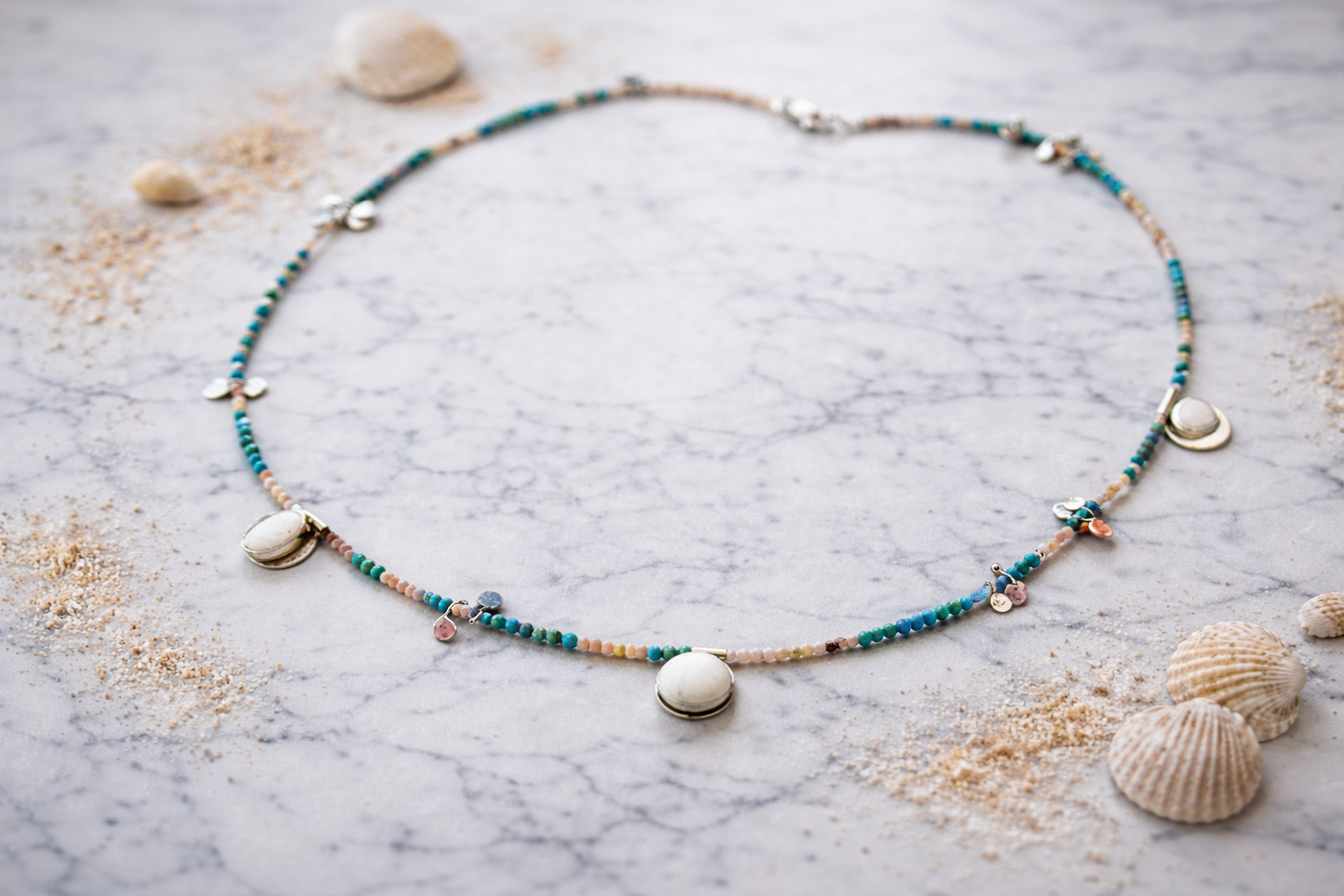
The sea – represented through turquoise beads, rich and calm, like the Aegean.
Sunlight on water – tiny faceted pink opals that catch the light and sparkle, echoing the way the sun dances across the waves.
The shore – small white pebbles, inspired by the beaches Amy loves more than anywhere else. A piece of her special place, always with her.
Cultural history and artifacts from Greece that still influence much of their contemporary jewellery today.
Each element is wrapped in silver bezel settings, lifting them from their natural environment and transforming them into something precious—just as lived experiences become something more when carried forward.
The necklace is intentionally asymmetrical. Its irregular pattern is balanced, but not uniform—reflecting the reality of life itself. Unpredictable, imperfect, yet harmonious.
Above all, the piece is designed to be intriguing and beautiful.
Just like my sister.
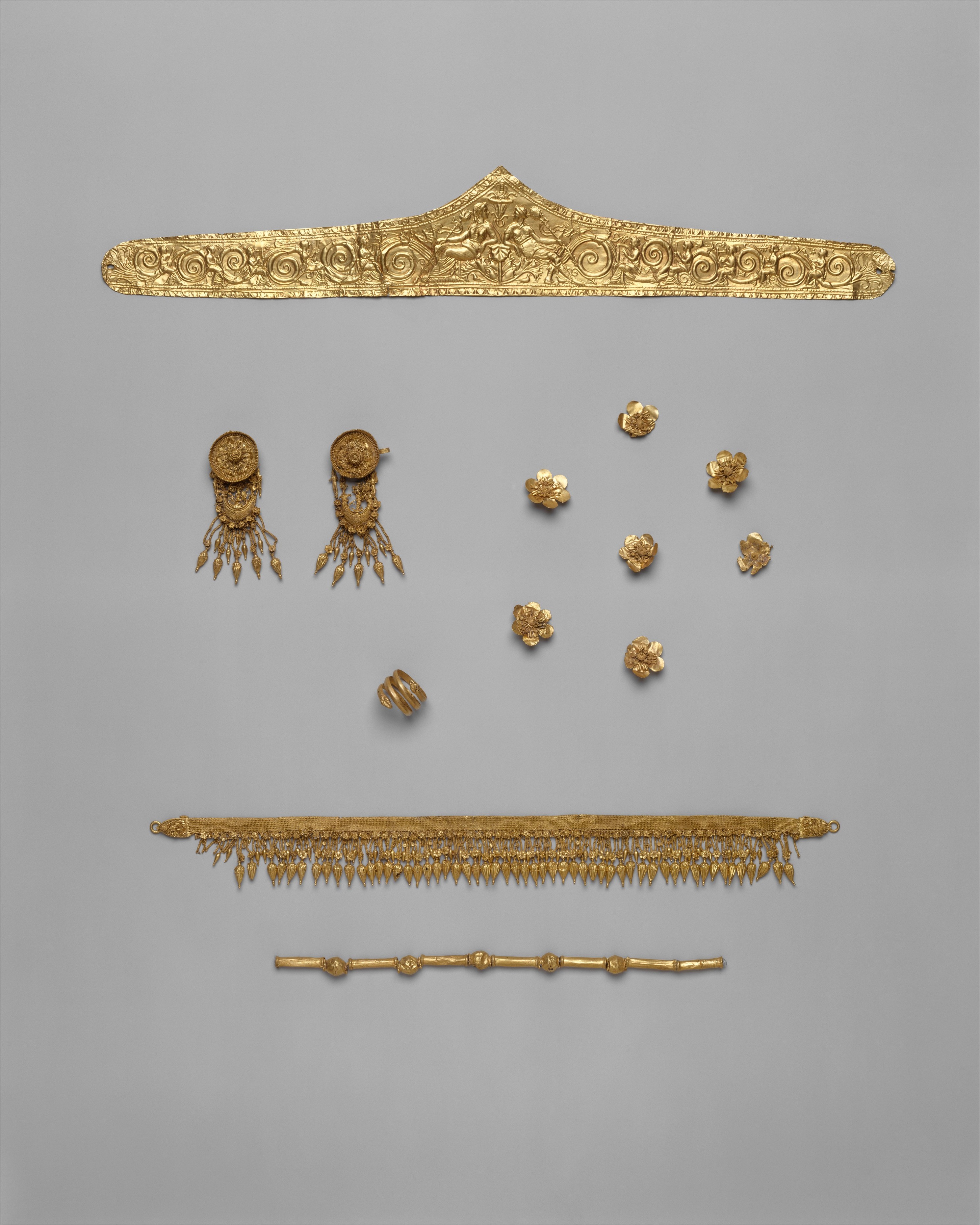
Gold Necklace of Beads and Tubes (Hellenistic Greek, ca. 330–300 BCE)
A classical Greek beaded necklace in gold from a tomb find. This object is part of The Metropolitan Museum of Art’s Open Access collection.
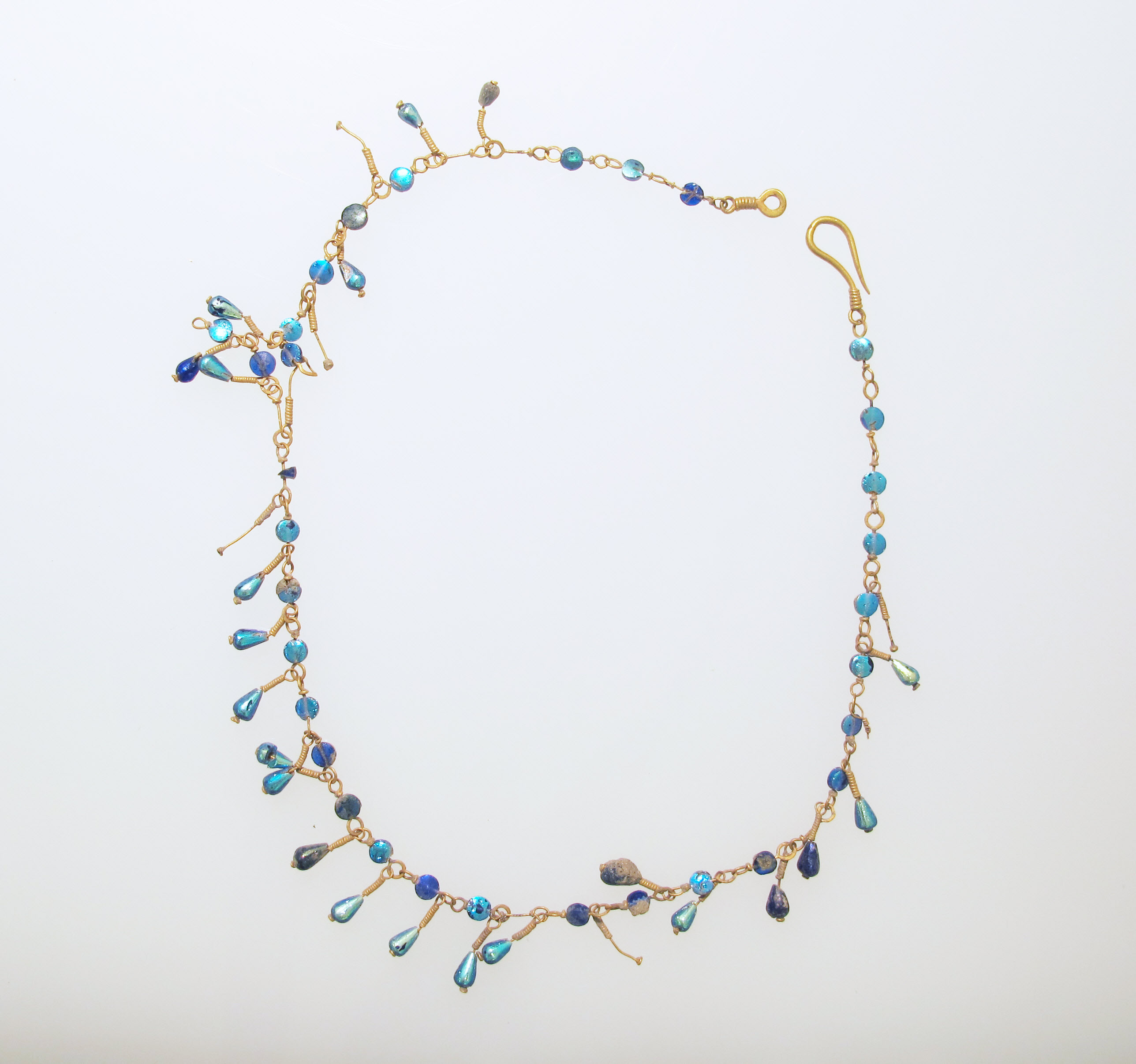
Necklace with Blue Glass Beads (Greek & Roman Beads)
A gold necklace strung with blue glass beads; useful for referencing ancient use of coloured beads and glass. Accessible through The Met’s Open Access programme.
Craft & Construction Details
This necklace was made entirely by hand using traditional silversmithing techniques:
Silver bezel settings for each stone and pebble from the islands beaches.
Individual silver accents formed by heating wire into molten balls, Then planishing select pieces into irregular discs.
Coated wire construction, carefully crimped for long-term stability and durability
Every technical choice was made to ensure the necklace would not only be meaningful, but wearable—strong enough to last, gentle enough to become part of everyday life. This way she had a little bit of her favourite place with her where she goes.
A Thank You, Made Tangible
This necklace is a reminder of survival, love, shared places, and the time we lost—and found again.
It is a thank you.
It is a celebration.
It is a story, worn close to the heart.
NHS guide on how to check your breasts — official guidance on self-checking your breasts or chest from the UK National Health Service:
https://www.nhs.uk/tests-and-treatments/how-to-check-your-breasts-or-chest/Cancer Research UK donation page — official donation and fundraising hub to help fund life-saving cancer research:
https://www.cancerresearchuk.org/get-involved/donate